Erasmus+ Mobility in Slovenia 🇸🇮

I was very fortunate to be selected to represent RMU to participate in the EU’s flagship international cultural exchange program – Eramus+ staff mobility program visiting beautiful Slovenia in Fall 2025….Slovenia is such a lovely country that I didn’t know much about but will gladly visit again in the future!
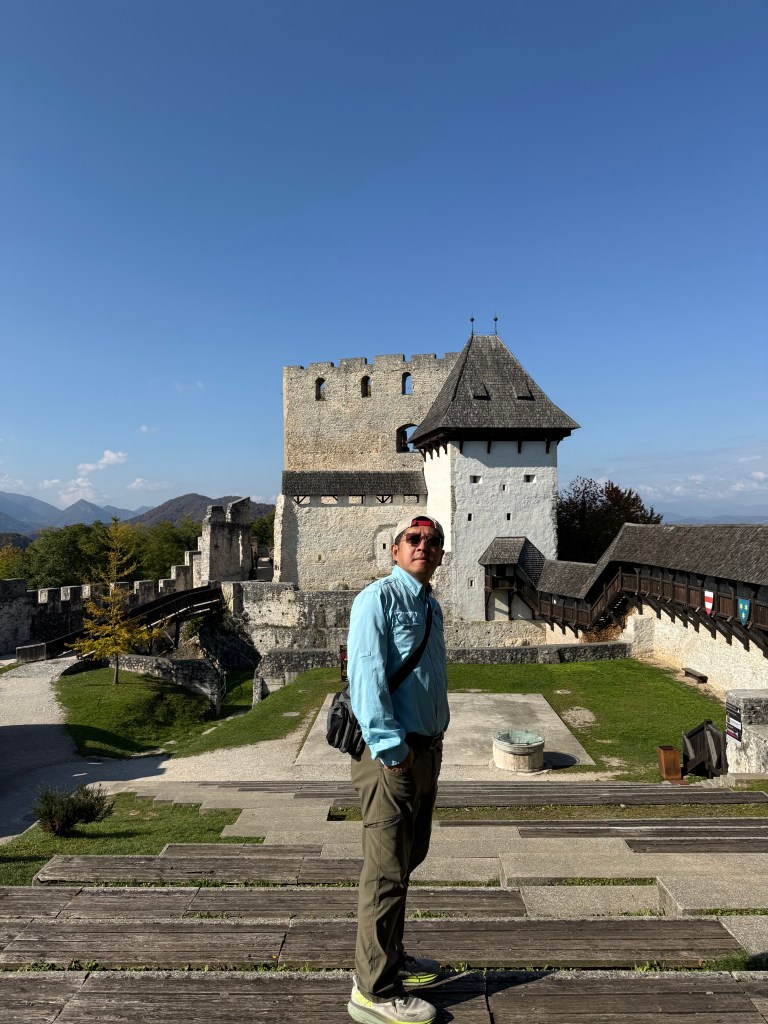
Exploring the beautiful Middle Ages castle in Celje, Slovenia during the Erasmus+ staff mobility program.

Day 1 as a visitor
What an inspiring first day in Slovenia as part of the Erasmus+ mobility program! It was a privilege to join a delegation of academic colleagues from across Africa for their FOSTER project as an observer to immerse ourselves in the Slovenia’s vibrant innovation and research ecosystem.

Our day began with a deep dive into Slovenia’s open science projects, where we gained firsthand insights into how universities and research organizations are driving accessible and collaborative research. It sparked a crucial conversation on the importance of creating robust infrastructure and the right incentives to effectively share research data and results. This strategic approach is key to promoting scientific progress, fostering innovation, and strengthening trust within the global research community.

The highlight of the afternoon was the visit to a regional incubator center, where we witnessed the incredible journey of startups from concept to successful commercialization through acceleration and mentorship. Looking forward to the rest of the week and to fostering future collaborations!

Day 2 in Slovenia 🇸🇮
The day began with a visit to the Institute of the Republic of Slovenia for Vocational Education and Training (CPI), together with academic colleagues from Africa. CPI is a fascinating public–private partnership that bridges the supply and demand sides of the labor market, with a strong focus on vocational education and what the EU calls employability training and education.

One particularly insightful takeaway was learning about the Slovenian Qualifications Framework (SQF) and how it translates into the European Qualifications Framework (EQF). This alignment provides job seekers with a clear way to demonstrate their educational credentials and competencies across borders—an elegant example of how policy can empower mobility and opportunity.

Later in the day, I had the privilege of delivering my first lecture at Mednarodna fakulteta za družbene in poslovne študije (International School for Social and Business Studies (ISSBS)) to the Master of Knowledge Management students. My topic focuses on Risk Management as a Discipline and the Security Challenges of Adopting AI. To bring the issue to life, I used recent deepfake news stories as case studies—powerful reminders of the seriousness of the problem. The students engaged with energy and insight, which made the session especially rewarding.

To close the lecture, my gracious host professor added a lighthearted twist: assigning students a group project on the topic of which Slovenian presents I should buy before leaving. A perfect reminder that learning is not only about knowledge, but also about building connections and sharing culture.

Grateful for the warm hospitality, the stimulating exchanges, and the chance to keep learning alongside others.

Day 3 as an Erasmus+ Visiting Professor 🇸🇮

In addition to the warm welcome from the incredible ISSBS faculty and staff, we had the chance to discuss future collaborations between RMU and ISSBS. It’s inspiring to see how, with just over 500 students (not at all “small” by Slovenian standards), ISSBS meaningfully engages with local, European, and global communities and partners.

I also had the privilege of delivering lectures on risk management, AI, and cybersecurity for business to both undergraduate students in Economy and Society and master’s students in E-Business. One of the highlights was when the class burst into laughter as I shared my own decision-making heuristic for coming to Slovenia—before showing how criminals exploit similar heuristics through deepfakes. A fun way to make a serious point!
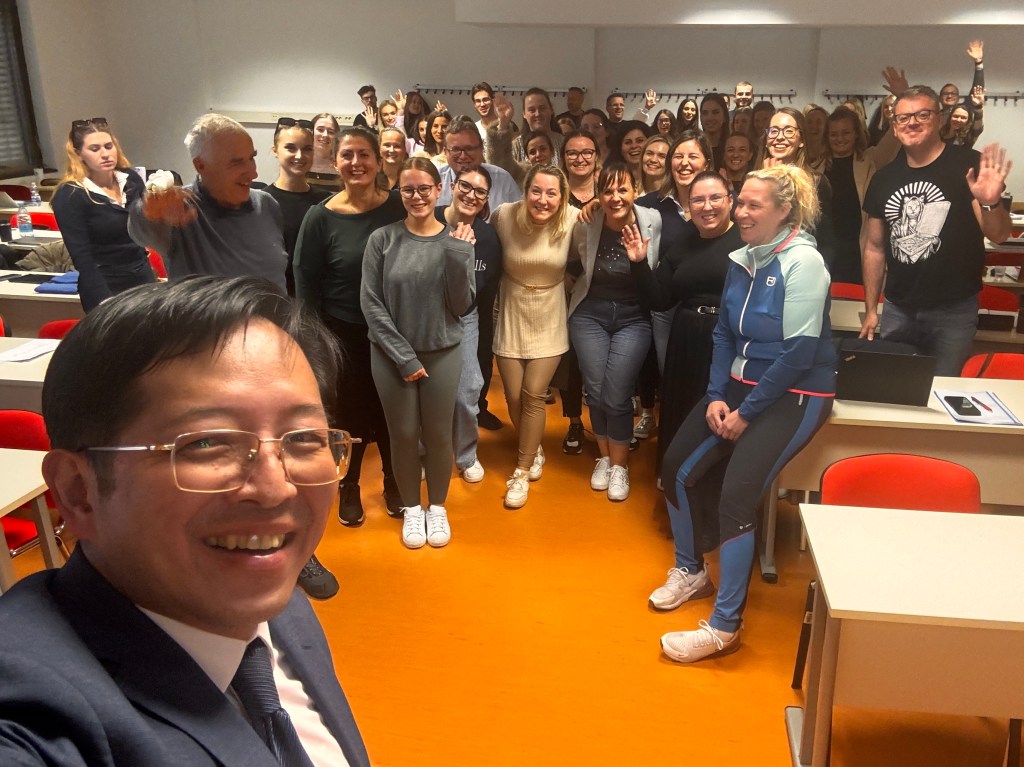
Group photo with students and faculty during a lecture at the International School for Social and Business Studies in Slovenia.

Many thanks to my fellow hosts and colleagues for making this such a memorable and impactful experience: Dean Kristijan Breznik, Prossors Dr. Andrej Koren, Dr. Vesna Skrbinjek, and Dr. Dusan Lesjak – and of course, Barbara Jurgec for amazing support!
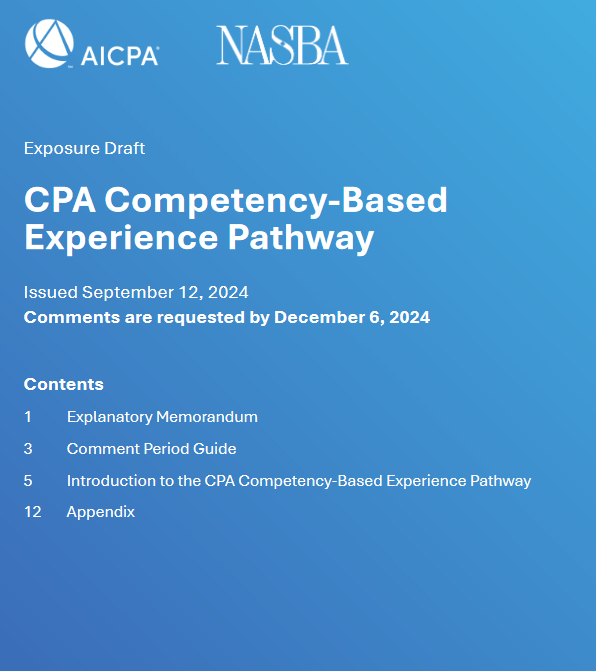
Response to AICPA/NASBA CPA Competency-Based Experience Pathway

It’s not a secrete that the CPA profession in the U.S. has a pipeline crisis. Many attribute (at least in part) the problem to the 150-credit hour requirement to be licensed as a hurdle to prevent college students from choosing accounting as a career. 150-credit requirement is not perfect – I believe the original idea is to create that “professional” image by mimicking what the medical and legal professions do to prepare their next generation lawyers or doctors. Many can argue that goal was not achieved after a decade of implementing this model. In this exposure draft, AICPA and NASBA proposed an alternative pathway for students to be licensed as a CPA. You can find a copy of the exposure draft here.

It is concerning that this draft exposure devalues the importance of formal education. The proposed additional pathway suggests that 30 additional credit hours of formal education could be substituted with one extra year of work experience verified by a CPA using the “competency framework”. This equivalence is questionable, as a formal education provides a structured learning environment, rigorous coursework, and critical thinking development that cannot be fully replicated through on-the-job experience. The recent updates to the CPA Exam (CPA Evolution) have increased the emphasis on substantive knowledge and skills required of CPAs. Reducing the amount of formal education while simultaneously raising the bar for professional competence creates a paradoxical situation. It is unreasonable to expect candidates to be adequately prepared for the more rigorous CPA Exam without the foundational knowledge and skills developed through a robust educational program.

Additionally, many students currently utilize their final year of undergraduate study, during which they pursue the extra 30 credit hours, to dedicate themselves to CPA Exam preparation. Research indicates that post-graduation delays in taking the exam often result in lower pass rates, as life commitments and work responsibilities can hinder effective study time. If students are forced to postpone exam attempts due to immediate post-graduation employment, without the dedicated study time afforded by a fifth year of education, the overall CPA Exam pass rate is likely to decline. This could ultimately lead to a less qualified pool of CPAs entering the profession.

Another critical factor to consider is the potential impact on public trust. If a bachelor’s degree were to be reduced to 90 credit hours (as some colleges in the U.S. are exploring), it would further diminish the educational requirements for CPAs. This raises concerns about whether the public would continue to view CPAs as highly qualified professionals capable of providing complex financial, tax, and consulting services.

Another issue that’s even more concerning is the use of the competency framework in the additional licensure pathway. The proposed competency-based approach, which relies on supervisor assessment and a simplified evaluation process, raises concerns about the adequacy of assessing candidates’ readiness for licensure. Accredited higher education institutions go through rigorous processes to develop the assessment of academic programs. Replacing the assessment programs often adopted by reputable academic programs and traditional academic rigor of coursework and grading with a simple yes/no questionnaire undermines the quality assurance necessary for protecting the public interest. “Check the box” form is not the same as formal education and can be gamed easily.

It is also not logical to expect a 25 or 26-year-old CPAs to accurately assess the competencies of a 22 or 23-year-old candidate. Implicit and explicit biases could significantly influence these evaluations, potentially leading to unfair assessments. Also, there’s no accountability in such evaluations. Will the evaluators be liable in the future since CPA is a regulated profession?

It is crucial that any alternative pathway to CPA licensure maintains the high standards of education and professional competence that have historically been required. Diluting these standards could compromise the integrity of the CPA designation and potentially harm the public.

G7 week

I was fortunate to participate in the G7 Cybersecurity Seminar in Tokyo in early May, ahead of the G7 leaders’ annual summit in Hiroshima, Japan. As described in the G7 Digital and Tech Ministers’ Ministerial Declaration, the G7 promotes secure, resilient, competitive, transparent, sustainable, and diverse digital, telecoms, and ICT infrastructure supply chains.

However, the increased diversification of third-party services in tech also poses a significant challenge in terms of cybersecurity. During the seminar, the G7 Cyber Expert Group discussed an update to its Third-Party Cyber Risk Management in the Financial Sector, recognizing the complexity and challenges of using a web of third-party solutions at financial institutions.

Some takeaways from the seminar include the importance of international collaboration in tackling increasingly sophisticated cyber attacks, the crucial role of transparency and information sharing (the U.S. government’s periodic intelligence briefing on cyber attacks generated a lot of interest from the audience), the challenge of attracting talent, and the need to raise awareness to promote more resilient risk management programs.

The Age of Exploration and Meiji Gakuin

After a few days in my Japan long-staying, I found out that my host institution, Meiji Gakuin University, has a study abroad group that will visit Taiwan soon. As a study abroad faculty veteran, I have to find out what the trip is about and perhaps tag along since I have a plan to visit Taiwan as well. It turns out the MGU travel group itinerary does overlap mine! The faculty lead of the group, Professor Nishihara, is super nice and invited me to join them in Taiwan – so here it is; I went to Tainan, the first capital of Taiwan, in a beautiful (but hot!) afternoon to join him and his students, exploring Fu Cheng (meaning “capital”)’s history and delicious Tainan street foods.

Professor Nishihara (center first row) and his students in Fort Zeelandia

Textbooks in Taiwan did not really teach much about the role of Tainan, or the history of Taiwan for that matter when I grew up. Education at that time existed only to serve ruling Kuomintang’s “great China” ideology, so much of my knowledge of the history of the land where I grew up comes from my reading after I started college. But even though I only read about the events and stories under Dutch rule, Koxingya rule, Qing rule, and then Japanese colonial rule – but in Professor Nishihara’s lecture to his students, I came to realize that history has many lenses….and his as a scholar studying international trade shows that we can look at the role of Taiwan in the age of great exploration – when Europeans and Asian nations interacted and traded – not necessarily political in the beginning but simply explorers trying to find their wealth. Fu Cheng happens to be in an exact location where Europeans, Chinese, and Japanese merchants can meet and trade. Anyway, my quick trip to southern Taiwan was a time well spent and I look forward to meeting with more MGU stuents in Tokyo when the new semester starts!

Related link: Professor Nichihara’s field report on Meiji Gakuin web site (in Japanese): 2022年度 海外フィールドスタディ(台湾) 実施報告 | 明治学院大学経済学部 (meijigakuin.ac.jp)

Arriving Japan! 日本到着

After a long (but comfortably empty) flight, I finally arrived in Japan. We thank God for His blessings – right before our departure, I was at my church’s quarterly co-workers’ meeting and 30+ brothers and sisters along with the pastor and elder laid on their hands in prayer to bless our journey. So, my journey as a Fulbright scholar is now (almost) started. I came to Japan early with my daughter, Rebecca, who secured an internship with KPMG Ignition Tokyo so both of us are pretty excited! The funny thing is that she now actually will start work before I do…but I am happy for her. The first two days in Japan were filled with visits to municipal and immigration offices… and of course, good food that I haven’t had for a long time! Thanks to my MGU faculty host, Professor Yamada, who secured a 3? bedroom apartment near campus for us. I put a “?” to describe the room situation because one of the bedrooms is actually a room inside a bedroom – like a glorified closet but it has a bed and everything….it’s like Doraemon’s room if you know what I mean :-> Nevertheless, this apartment will now be our home away from home for the next six months!

Fulbright!

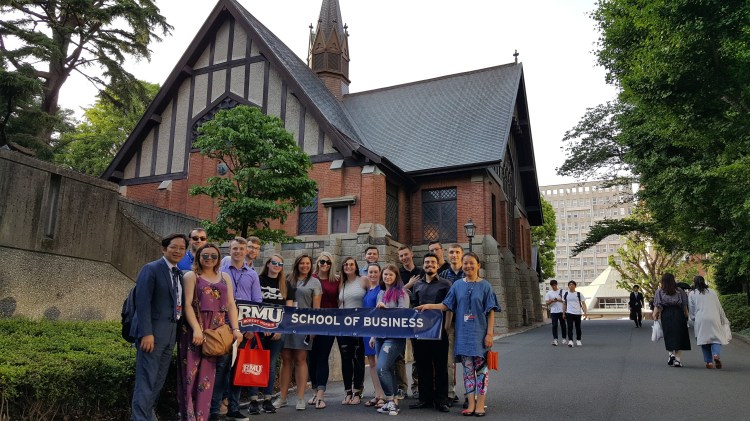
I am so excited to be awarded the Fulbright scholarship to lecture and research cybersecurity disclosures in Japan in 2023! Becoming a Fulbright Scholar has always been one of my career goals – at the height of working on my department’s AACSB accreditation in 2021, I also took on a personal project of applying for this prestigious scholarship program offered by the State Department of the United States. I didn’t think that I will be successful in the first attempt – but to my surprise, I was awarded the lecture/research grant to go to Japan in 2023! I am very fortunate to be blessed with many who helped me in this process – from the project statement to invitation letters, I can’t imagine how I can pull it through to meet all the application criteria. As of this writing, I only have weeks before I embark on the journey to visit Meiji Gakuin University in Tokyo, Japan. This is not the first trip to visit this Christian university, though – I had a personal visit and took RMU students to visit the university before – the campus is beautiful and is so conveniently located in the heart of Tokyo. I look forward to visiting and spending a lot more days and nights this time!

Our AACSB Journey – Road to Become the “ONLY”

In the summer 2002 AACSB confirmed that #RMUAccounting is now the ONLY accounting program in western Pennsylvania to have received the AACSB Accounting Accreditation. Read the AACSB news release about this historic moment. So many students, faculty, staff, and professional partners were involved in this journey. The university social media editor says it the best “from Pittsburgh School of Accountancy ➡️ AACSB Accounting Accredited – For over 100 years, accounting has been a staple of Robert Morris. A few weeks ago, we celebrated the students and faculty who made this accreditation possible!” (Here is the link.) More details of our “travel logs” for our journey to AACSB Accounting accreditation can be found here.